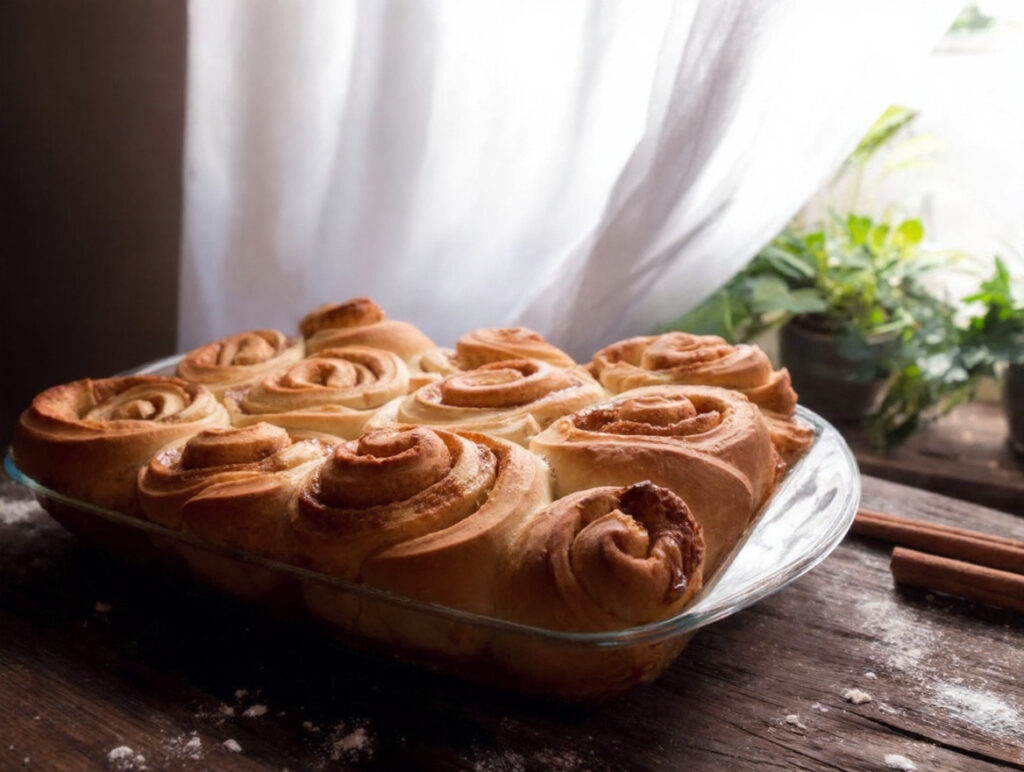
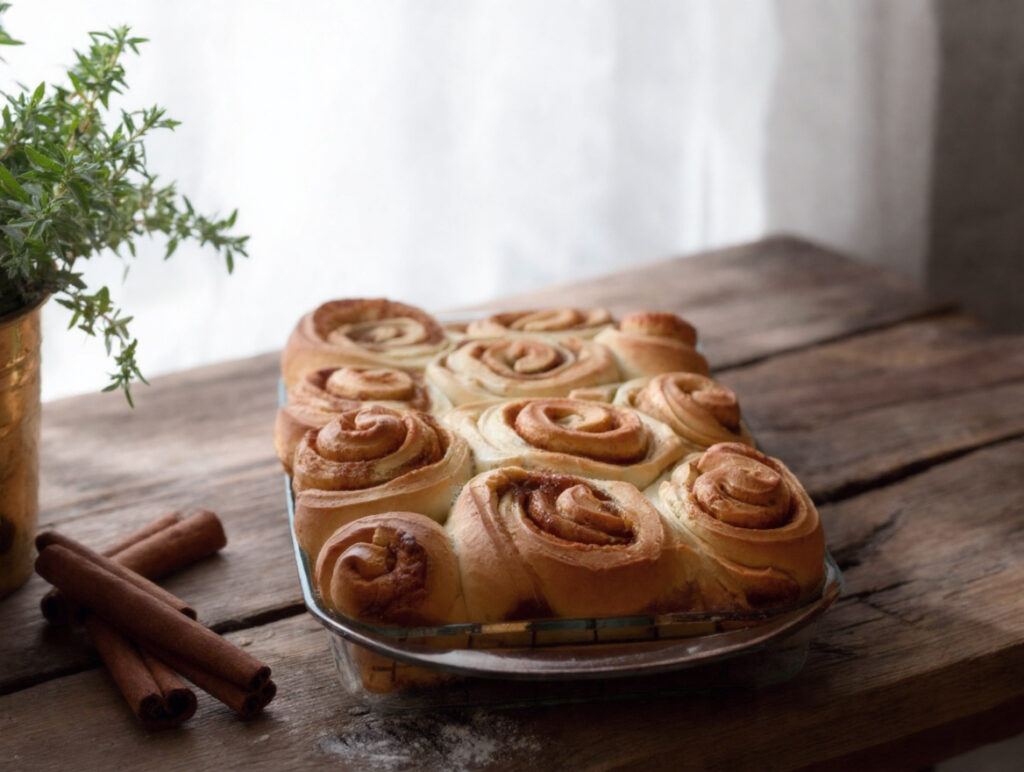
It has been a long-running joke in my house that my homemade cinnamon rolls never turn out the same way twice. They’re either too gooey, rock hard, or completely inedible 😅. Despite that, I genuinely love baking—especially on slow Saturday and Sunday mornings when the smell of fresh cinnamon buns fills the house. Baking has become part of my weekend reset ritual, a way to slow down, spend time with my husband and daughter, and continue building my confidence in the kitchen.
I grew up cooking almost everything from scratch, but baking was different. If we baked at all, it usually came from a box. Because of that, learning how to make homemade cinnamon rolls from scratch has felt like a personal challenge—and honestly, a small victory every time I try again. Even though I don’t eat much of what I bake, I love knowing that my family, friends, and neighbors get to enjoy the finished product.
That’s why I’m especially excited to share this fool proof cinnamon buns recipe. After years of trial and error, I’ve finally cracked the code. I’ve made these cinnamon buns twice now, and they came out perfectly soft, fluffy, and gooey both times. If yeast has ever intimidated you, you’re not alone. Yeast recipes can feel overwhelming for beginner or non-bakers—but this one truly is no-fail. There’s no stressing about milk temperature, no complicated steps, and no overthinking. You literally dump in the yeast and go.
If you’ve been searching for easy cinnamon rolls, beginner-friendly baking recipes, or a no-fail cinnamon bun recipe that actually works, this is the one I wish I had years ago.
Why You’ll Love This Recipe
Truly fool proof — great for beginner bakers
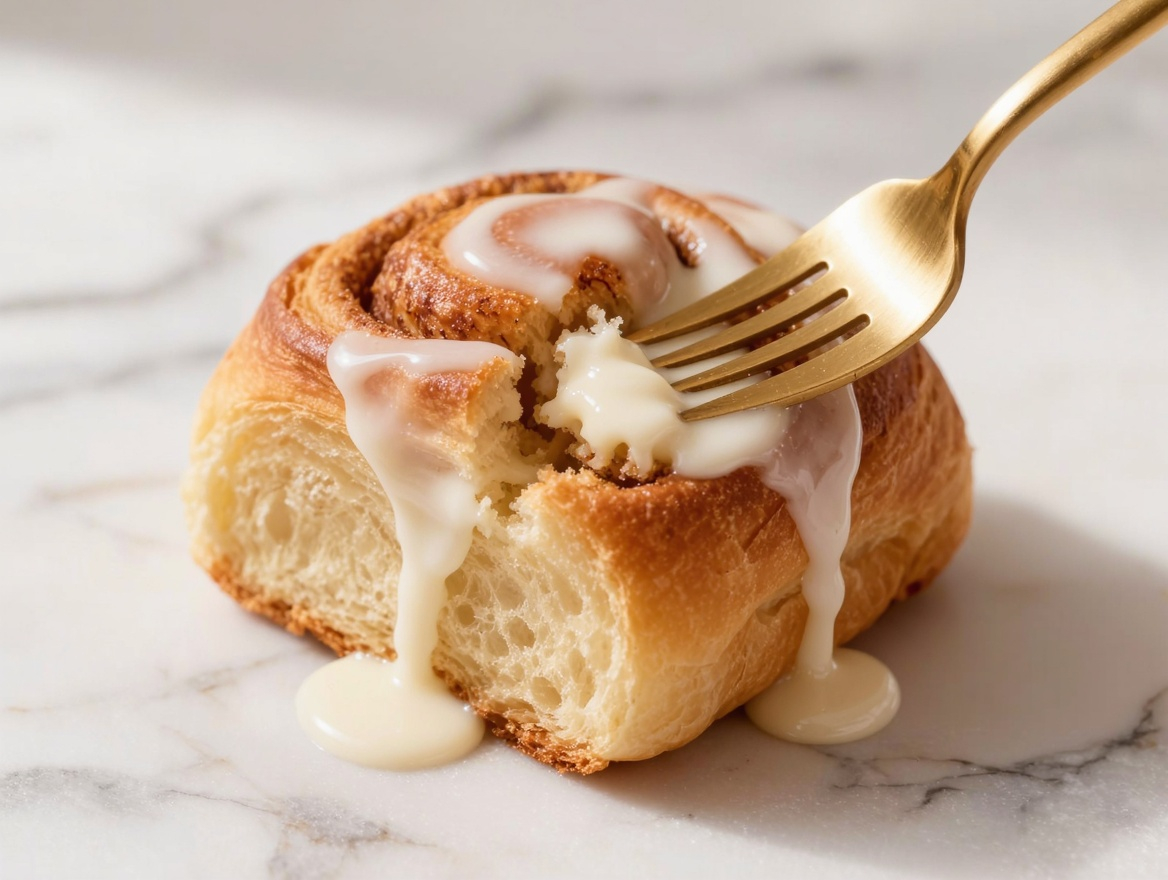
Soft, fluffy texture with gooey centers
No need to stress about yeast or milk temperature
Perfect for make-ahead, overnight, or freezer prep
Bakery-style cinnamon rolls made at home
What Makes These Cinnamon Buns Fool Proof?
The secret is the tangzhong method, a simple cooked flour-and-water paste that locks moisture into the dough. This technique keeps the cinnamon rolls soft for days and prevents them from drying out or baking unevenly. Combined with instant yeast and a forgiving dough, this recipe works even if you’re not an experienced baker.
What Is Tangzhong?
Tangzhong is a simple bread-making technique that involves cooking a small portion of flour and liquid into a thick paste before adding it to dough. This pre-cooked mixture helps the dough retain more moisture, resulting in bread that is exceptionally soft, fluffy, and tender. When used in cinnamon buns, tangzhong creates rolls with pillowy centers, a delicate crumb, and a longer shelf life without becoming dry.
Unlike complicated baking methods, tangzhong is beginner-friendly. It doesn’t require special equipment or advanced skills—just flour, water (or milk), and a few minutes on the stovetop. Once incorporated into the dough, it improves texture, elasticity, and overall consistency, making it ideal for enriched breads like cinnamon rolls, dinner rolls, and milk bread.
The History of Tangzhong
Tangzhong originates from East Asian baking, particularly in Japan and Taiwan, where soft, cloud-like breads are highly valued. The method gained wider recognition in the early 2000s when it was popularized in Taiwanese baking literature as a way to create ultra-soft bread using everyday ingredients.
The technique itself is rooted in food science. By heating flour with liquid, the starches gelatinize, allowing them to absorb and hold significantly more moisture than raw flour alone. This process prevents bread from staling quickly and creates the signature softness associated with Japanese milk bread and other Asian-style bakery loaves.
Over time, tangzhong made its way into Western kitchens as home bakers and professional bakers alike began adopting it for rolls, brioche-style doughs, and cinnamon buns. Today, it’s widely loved for its reliability and its ability to turn even simple recipes into bakery-quality baked goods.
Key Ingredients You’ll Need
Bread flour for structure and softness
Instant yeast for reliable rising
Heavy cream and whole milk for richness
European-style butter for flavor (regular Costco butter works too)
Brown sugar and cinnamon for classic filling
Cream cheese for a smooth, balanced frosting
(Exact measurements are listed in the recipe card below.)
Tips for Perfect Cinnamon Rolls Every Time
Measure flour using the spoon-and-level method or a kitchen scale
Use cool, pliable butter — not overly soft or melted
Roll the dough evenly to ensure uniform baking
Frost while the rolls are warm so it melts into the layers
Easy Fool Proof Cinnamon Buns (Beginner Friendly)
These fool proof cinnamon buns are soft, fluffy, and perfectly gooey every single time—no complicated steps, no stressing about yeast, and no baking experience required. This easy homemade cinnamon roll recipe is made for real life, slow weekend mornings, and bakers who just want a no-fail win in the kitchen.
8tablespoonssalted European-style or regular salted butterroom temp
Cinnamon Filling
12tablespoonssalted butterroom temp
¾cuplight brown sugarpacked
2tablespoonsground cinnamon
2teaspoonsvanilla powderoptional
Cream Cheese Frosting
6tablespoonsunsalted butterroom temperature
5ouncescream cheesecold
1cuppowdered sugar
½teaspoonvanilla bean paste
1tablespoonheavy cream
Get Recipe Ingredients
Equipment
Stand Mixer or Hand Mixer
Microwave or Stovetop
9×13 glass or dark baking pan
Method
Line a metal 9×13-inch baking pan with parchment paper and set aside.
To make the tangzhong, whisk the bread flour and water together in a small saucepan until smooth. Cook over medium heat, whisking constantly, until the mixture thickens into a paste-like consistency, about 4–5 minutes. Transfer to a bowl and allow it to cool slightly.
In the bowl of a stand mixer fitted with the dough hook, combine the flour, sugar, yeast, and salt. Add the heavy cream, milk, egg, vanilla, and prepared tangzhong. Mix on low speed for about 2 minutes, until a shaggy dough forms.
With the mixer still on low speed, add the butter one tablespoon at a time, allowing each piece to fully incorporate before adding the next. Continue kneading for 10–12 minutes, until the dough becomes smooth, elastic, and pulls away from the sides of the bowl.
Shape the dough into a smooth ball by tucking the edges underneath. Place it seam-side down in the mixing bowl, cover, and let rest for 30 minutes.
While the dough rests, prepare the filling by mixing the butter, brown sugar, cinnamon, and vanilla powder until fully combined. Set aside.
Turn the dough out onto a lightly floured surface and roll it into a 15×21-inch rectangle. Spread the cinnamon sugar filling evenly over the dough, leaving a 1-inch border along one long edge.
Using a pizza wheel, cut the dough into 12 even strips, approximately 1¾ inches wide. Roll each strip tightly away from you and place the rolls cut-side up into the prepared baking pan.
Cover the pan loosely and let the rolls rise in a warm spot until doubled in size, about 1–2 hours. While they rise, preheat the oven to 325°F (162°C).
Bake for 30–35 minutes, or until the tops are lightly golden.
While the rolls bake, prepare the frosting. Beat the cream cheese and butter together until smooth. Add the powdered sugar and mix on low speed until light and fluffy. Mix in the vanilla and heavy cream until fully combined.
Allow the cinnamon rolls to cool in the pan for 15 minutes, then spread the frosting evenly over the warm rolls. Let sit for another 15 minutes before serving.